Archive·The System Design
PDF·33Stories

The System Design

An Engineering Newspaper · Curated by Adarsh Kumar

  /\_/\
 (=^.^=)
 (")_(")
				
  /\_/\
 (=^.^=)
 (")_(")
				

Source
Signal

No stories match the selected filters in today's edition.

Jane Street Reworks Message-Bus Indexing to Cut Recovery CPU by 30%

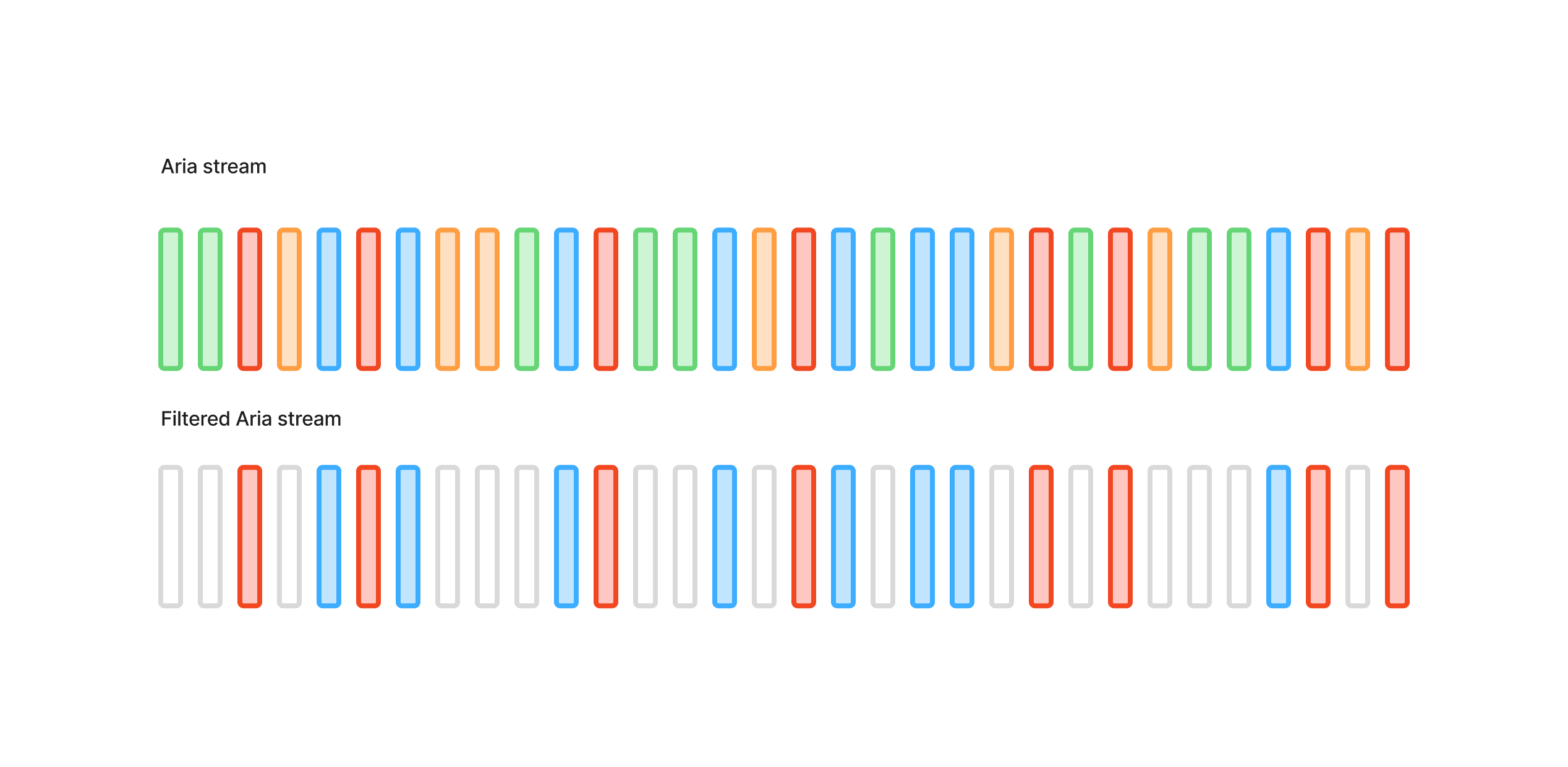
Jane Street describes an optimization to Aria, its internal message bus, which processes multiple terabytes of data per day. During recovery, clients replay recent messages but often need only a small subset of the topics; scanning the entire stream became costly as more clients used the path.

The redesign indexes topic partitions rather than every individual topic. When a client requests data, the system merges the relevant indexes with a min-heap to restore message order while avoiding a huge per-topic index.

The company reports a 30% reduction in CPU use on production workloads. The write-up also explains why the original linear scan remained attractive at smaller scale: its cache locality made a simple algorithm competitive until concurrency and volume changed the bottleneck.

This is a useful case study in choosing an index around the actual query pattern, then validating the trade-off against production behavior. It also emphasizes that ordering and correctness constraints must survive any optimization to recovery.

Anthropic announced a long-term cyber initiative focused on securing critical infrastructure and open-source software. Its first activities include a program that brings models, threat research, and on-site engineering support to providers serving operational-technology operators.

The company also introduced an opt-in vulnerability-scanning service for open-source projects. The mission statement acknowledges a practical gap in AI-assisted security: finding a weakness is only an early step; validating it, deciding its severity, and shipping a safe fix still require maintainers and operators.

Industrial control systems are difficult to patch because they may run for decades and cannot always be taken offline. The proposed partner model aims to connect model-assisted analysis with people who understand the equipment, deployment risks, and maintenance windows.

These are commitments and early programs, not evidence that the approach has already reduced incidents. Their value will depend on responsible disclosure, false-positive rates, maintainer consent, and whether the extra findings translate into verified remediation.

Linux Kernel Security Team Says AI-Found Bug Reports Are Manageable

LWN summarizes a Kernel Recipes talk by Greg Kroah-Hartman on the flood of AI-assisted Linux vulnerability reports. He described reviewing a set of 79 findings attributed to a model: some lacked useful details, some were not bugs, some were fabricated or duplicated, and others had already been fixed.

After filtering, the talk identified a much smaller set of issues that warranted attention. The point was not that AI-assisted analysis is useless, but that raw finding counts can exaggerate risk when reports are not validated against code history and the project’s threat model.

The kernel’s existing security process and tooling helped maintainers absorb the increase. Other projects may not have the same triage capacity, making report quality and coordination as important as the ability to generate candidate findings.

For vulnerability programs, this is a reminder to measure verified fixes rather than raw detections. Reports should include reproducible evidence, affected versions, and a clear explanation of exploitability so maintainers can spend scarce review time on actionable work.

BleepingComputer reports that the FakeGit campaign reactivated more than 17,000 GitHub repositories to distribute SmartLoader malware. Researchers said the operator repointed existing repositories rather than creating a new fleet, allowing malicious download links to be changed at scale.

The repositories use plausible README instructions and ZIP downloads. Earlier activity also disguised some projects as AI skills or MCP servers, making source discovery itself part of the attack surface for teams that install extensions and agent tools.

Removing a repository or blocking one domain may not be sufficient if the payload is copied into forks, release assets, or other download locations. The reporting recommends verifying project ownership and obtaining agent skills from official registries or vendor repositories.

Development teams should treat third-party code and tool instructions as supply-chain inputs. Pin trusted sources, review permissions before installation, and rotate credentials if an untrusted package has been executed.

OpenAI’s math repository records a substantial correction to its recent research: three manuscripts were withdrawn, while fourteen others were revised. The changes followed expert scrutiny of claims about AI-assisted mathematical results, including questions about proofs and the strength of the evidence.

The repository history and pull request make the update inspectable rather than leaving readers with only a press summary. That matters when a result depends on a long chain of formal arguments: reviewers need to see exactly what changed and whether the corrected version supports the original claim.

For teams building research agents, this is a reminder that generating a plausible proof is not equivalent to verifying one. Claims should be tied to checkable artifacts, versioned revisions, and independent review before they are presented as established results.

The withdrawals do not settle what AI systems can contribute to mathematics. They do show why evaluation pipelines need explicit proof obligations and a transparent correction process, especially when fluent explanations can make unfinished work look more conclusive than it is.

Hetzner’s technical overview maps the services that make a cloud VM’s network usable. It describes public connectivity, VXLAN-based private networks, host-side firewalling, DHCP configuration, and a metadata endpoint consumed by cloud-init and other integrations.

The placement of these services is an architectural choice. Running DHCP and metadata locally on each VM host can reduce dependence on a centralized service, while filtering traffic close to the VM avoids adding a separate central firewall path and its availability requirements.

The article is useful because it connects familiar guest configuration to the infrastructure behind it. A cloud-init request to a link-local metadata address, for example, depends on host services and carefully scoped network access.

For platform teams, the design raises practical questions about isolation between tenants, failure domains, and the handling of metadata requests. Understanding those paths helps when diagnosing connectivity failures or building equivalent services for a private cloud.

WebHosting.today reports on a KVM escape disclosed by security researcher Paulos Yibelo and confirmed by Vercel on October 3. The report says the researcher received a $50,000 bounty, while the public record still lacked a CVE, affected-version range, or patch details as of October 8.

The potential significance comes from the virtualization boundary: KVM underpins many Linux VM deployments, and a guest-to-host flaw could affect the isolation model operators rely on. However, the public information does not establish which configurations are vulnerable or how the issue can be triggered.

The article describes the gap in disclosure, not a confirmed impact across every KVM-based provider. Operators should follow vendor and kernel-maintainer advisories, inventory their hypervisor exposure, and avoid treating speculative scope as a confirmed incident.

This case illustrates the coordination challenge of reporting a serious flaw before a full technical write-up is available. Clear timelines and actionable mitigations are important, but publishing exploit details before a fix could increase risk for other users.

Temporal Shows How Durable Execution Can Keep a Coding Agent Running

Temporal’s article describes running the Pi coding agent as a durable workflow. The central idea is to persist workflow progress so the agent can recover after a worker restarts or a process is interrupted, instead of treating a long task as one fragile session.

This matters because agent work can span tool calls, code execution, waits, and human decisions. Restarting from scratch can waste compute and repeat side effects; durable orchestration gives each step a recoverable place in the workflow history.

The pattern does not make the model deterministic or guarantee that a resumed task will make the right decision. External actions still need idempotency, bounded retries, and explicit approval for changes that should not be repeated automatically.

The example is useful when designing coding agents and other long-running automation. It shifts reliability work from keeping a process alive to defining state transitions and recovery behavior that remain understandable after failure.

Four Coding Agents Build PDF Editors in a $100 Experiment

In a small experiment, researcher Nielstron gave four coding agents a $100 budget to build a usable PDF editor. The resulting applications were functional enough to try, but the author reports finding bugs and awkward interactions within a few clicks.

The experiment highlights a weakness in common coding-agent evaluations: a program can compile and satisfy a feature list while still being unpleasant or unsafe to use. Agents may miss installation friction, error recovery, and the details that become obvious only when someone pursues a real task through the interface.

The author describes the run as exploratory rather than a representative benchmark. The sample is small, and each agent’s result depends on its tools, budget, and prompt, so it should not be generalized into a ranking of coding systems.

The practical lesson is to test the whole product loop. Human review should cover setup, realistic workflows, error states, and accessibility, not only whether generated code builds or passes narrow unit tests.

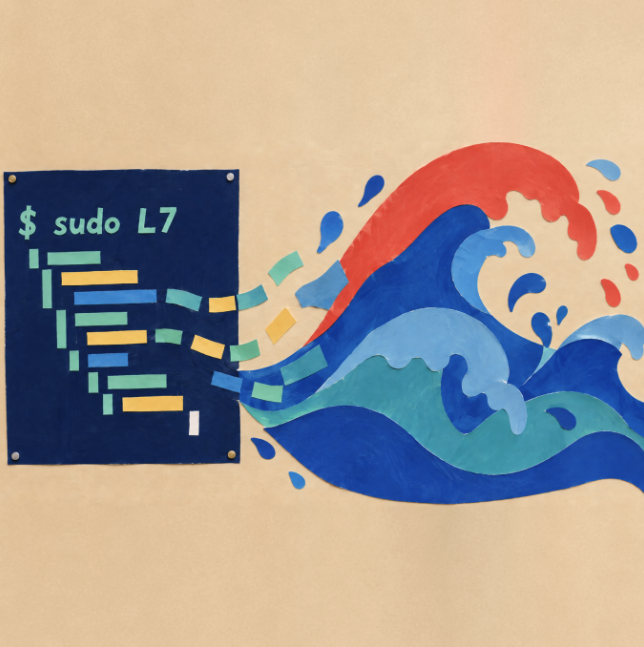
Surge AI's sudo L7 Benchmark Tests Coding Agents on Engineering Judgment

Surge AI introduced sudo L7, a benchmark intended to test staff-level engineering behavior in coding agents. Its 60 tasks cover work such as migrations, performance changes, and security fixes, with evaluation that extends beyond whether the resulting code passes a narrow test.

The tasks ask agents to identify risks, explore an existing codebase, and decide what should or should not be changed. This targets a gap in common benchmarks, where the requirements are clear and success can be reduced to a test result.

The company reports that leading agents completed fewer than half of the assignments. Because the benchmark is vendor-authored and uses a proprietary task set, the scores should be treated as one evaluation rather than a definitive ranking.

The framework’s key contribution is the evaluation target: architectural judgment, risk awareness, and communicating limits. Teams adopting coding agents should test those behaviors explicitly in their own repositories and review processes.

Tom’s Hardware reports that Ukrainian drones struck Yandex data-center facilities in Russia, followed by a major outage. The affected sites reportedly housed two of the company’s top supercomputers, placing both cloud services and high-performance computing capacity in focus.

The event is a reminder that data-center availability is constrained by physical location as well as software. A region can lose power, connectivity, cooling, or access to equipment, and a service spread across several racks may still share the same geographic risk.

For critical workloads, resilience planning should examine whether replicas and backups sit in genuinely independent failure domains. Recovery plans also need to account for unavailable staff, damaged links, and the time required to restore or relocate large compute jobs.

The report does not establish the full extent of damage or the duration of each service interruption. Customers should use provider incident updates for confirmed impact rather than extrapolating from the facility headlines.

Anthropic’s revised usage policy explicitly prohibits abusive or cruel behavior toward Claude and reiterates restrictions on deceptive campaigns, election interference, mass surveillance, and dangerous physical-world applications. The Verge reports that the update also clarifies when human oversight is expected.

Anthropic says conversation termination remains the primary enforcement mechanism for repeated, purposeless cruelty, distinguishing it from ordinary frustration, model testing, and dark creative work. That distinction matters to researchers who deliberately probe model behavior and need to understand how policy enforcement may affect their tests.

Other changes consolidate restrictions on deceptive commercial and political campaigns and clarify limits around weapons software, surveillance, and high-risk health and financial uses. As models gain tools that can affect people and real-world processes, a prompt-level refusal alone cannot reliably enforce those boundaries.

The announcement is a provider statement, not an independent measure of enforcement outcomes. Operators should treat it as a change in the service contract and review their own workflows for uses that require additional human approval or tighter access controls.

Google Introduces a Gemini Agent for Workspace Workflows

Google’s Gemini at Work announcement introduces an agent designed to carry out multi-step tasks across workplace products. The broader rollout also describes specialized agents and ways for organizations to connect the assistant to company data and existing workflows.

The architectural challenge is not simply choosing a model. An enterprise agent needs scoped access to documents and services, a way to preserve relevant task state, and clear boundaries between proposing an action and executing it.

Integrations can reduce the friction of routine work, but they also widen the blast radius of a mistaken instruction or compromised account. Administrators will need to understand which connectors are enabled, what each agent can read or change, and how actions are logged.

This is Google’s product announcement, so availability and capability claims should be read as vendor statements. The useful evaluation is whether the agent can complete representative tasks while respecting existing identity, audit, and approval controls.

Exa Introduces ATLAS, a Benchmark for Search-Intensive Agents

Exa released ATLAS, a benchmark for agents that must gather many entities and attributes through search. Its scoring includes entity discovery, complete-row accuracy, and individual-cell accuracy, giving different views of whether a system found the right subjects and filled in their details.

The authors argue that common search evaluations can be solved partly from model memory. ATLAS uses newer or niche information and reports that degrading the search results substantially harms performance, suggesting the benchmark is more sensitive to retrieval quality.

The benchmark is published by a search provider, so its claims and comparisons should be treated as vendor-authored results. The methodology is still useful for system designers: test the retrieval layer separately from the model and keep the task set resistant to memorization.

For production agents, search quality is only one dimension. Freshness, provenance, citation accuracy, latency, and the ability to stop when evidence is insufficient should also be measured before deploying a research workflow.

Bootstrap 6 Alpha Modernizes Its Sass, JavaScript, and CSS Foundations

Bootstrap 6 Alpha is the first preview of a major modernization of the long-running UI framework. The announcement highlights the Sass module system, ESM-only JavaScript plugins, newer browser APIs, and expanded support for current CSS capabilities.

These changes affect how applications compile and load the framework, not only how components look. The move toward standard modules and native browser features can simplify integration over time, but it may require migration work for projects that depend on older Sass patterns or plugin loading behavior.

The alpha is also an opportunity for maintainers to test their design systems against the new foundations and report compatibility issues before a stable release. It should not be treated as a drop-in production upgrade.

Bootstrap’s continued investment matters because it underpins a large installed base. A staged migration, pinned dependencies, and visual regression tests will help teams evaluate the changes without destabilizing existing interfaces.

FizzBee Uses Dynamic Logic to Expose Gaps in Natural-Language Requirements

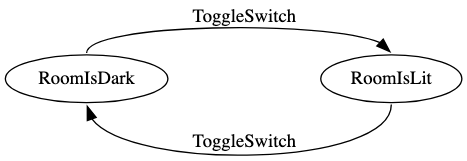
FizzBee’s article argues that a requirement such as “appointments must be within a stylist’s schedule” states an invariant but does not fully define observable behavior. It uses a small booking example to show how a system can accept or reject actions under explicit conditions.

The proposed approach expresses preconditions and postconditions with dynamic logic. Instead of relying on a sentence that sounds complete, the model describes what happens when a customer books an available slot, requests an unavailable slot, or tries an action that should be disabled.

That distinction matters for implementation and tests. A coding agent can translate a vague statement into code that appears reasonable while silently choosing policies the product owner never specified.

Formalizing actions and state does not remove the need for product decisions, but it makes missing cases visible earlier. Teams can use the model to align stakeholders, derive tests, and check whether implementation behavior actually preserves the intended invariant.

Ubuntu's Web Infrastructure Faces a Sustained DDoS Attack

Phoronix reported that Ubuntu’s website, ISO downloads, and related resources were disrupted by a sustained distributed denial-of-service attack on October 8. Canonical’s IT team was working to mitigate the impact; the report notes that this was not the first such incident.

The disruption highlights that a widely used operating system depends on public-facing infrastructure for more than marketing pages. Download availability affects new installations, recovery workflows, and organizations that need to provision machines during an incident.

Operators can reduce operational dependence on a single route by maintaining verified installation media, approved mirrors, and internal caches. Those measures do not stop an attack on the upstream service, but they can preserve the ability to rebuild systems.

The report does not establish the attacker’s identity or disclose a complete incident analysis. Treat the event as an availability warning and rely on official status updates for scope and recovery details.

Samaya reports that recent frontier models outperformed analyst consensus when predicting revenue surprises across 456 second-quarter earnings releases. Its evaluation gives models a financial research environment with information available before each company’s earnings report.

The setup is important: forecasting requires current data, and a model’s answer is only meaningful if the cutoff prevents it from seeing the outcome. Comparing against both raw and bias-corrected analyst consensus also makes the human baseline more demanding than a simple average.

The result is the company’s own benchmark, not an independent replication. Readers should examine the task selection, model access, scoring rules, and whether the same method generalizes beyond the evaluated quarter and revenue metric.

For system designers, the most transferable idea is the harness: provide controlled access to time-bounded sources, log retrieval, and compare predictions against an explicit baseline. Such controls help separate reasoning ability from information leakage.

Andy Pavlo Examines What Happens When Billions of AI Agents Hit a Database

Database researcher Andy Pavlo’s October 8 talk asks what happens when billions of AI agents use databases. The premise shifts attention from a single assistant request to the aggregate workload produced when automated systems query, update, and retry at machine speed.

Agent traffic can be bursty and highly repetitive. Without budgets and coordination, many agents may ask similar questions, poll for state, or retry after transient errors, turning a seemingly lightweight feature into a costly workload.

Database and application teams should plan for admission control, caching, idempotent writes, and explicit per-agent quotas. Observability also needs to distinguish human requests from automated activity so operators can identify runaway loops without hiding legitimate service demand.

The video is a forward-looking discussion rather than a measured forecast of a specific deployment. Its useful design prompt is to test realistic agent concurrency and failure behavior before assuming existing human-facing capacity models will hold.

The Guardian reports that Co-op Legal Services is using AI to monitor customer calls handled by staff. The system analyzes conversations, extending automated assessment from after-call summaries toward ongoing visibility into employee-customer interactions.

Call analysis can help identify quality issues or recurring customer problems, but it can also create high-stakes scores from noisy signals such as accent, call complexity, or a customer’s emotional state. A model’s assessment should not be treated as an objective measure of an employee’s performance.

The deployment raises questions about notice, retention, access to recordings, and whether workers can challenge a decision based on automated analysis. Those safeguards belong in the data and review architecture, not only in an employee handbook.

The report documents concerns about surveillance and workplace trust. Organizations considering similar tools should define a narrow purpose, restrict access to recordings, and make human review and appeal possible before analytics affect employment decisions.

McClatchy Expands AI-Generated Content as Local Newsrooms Cut Staff

Tech Policy Press reports on McClatchy’s rollout of AI-generated story summaries alongside newsroom layoffs. Reporters described learning about the tool through assignments to review generated material, while unions raised concerns about advance notice and whether staff names should appear on AI-produced work.

The story shows that an automated publishing pipeline is also a governance system. Editors need to know which source article was summarized, what the model changed, who reviewed the output, and how errors are corrected after publication.

Workers’ objections are not merely about job displacement. They also concern attribution and public trust: a byline can imply that a journalist verified claims they did not write or approve.

For organizations automating content, disclosure and review should be designed into the workflow rather than added after controversy. The reporting also notes prior uses of AI-generated content across the company’s outlets, making the transition a broader operational choice rather than a single experiment.

EFF Warns That Age Checks Can Exclude People Without Government ID

The Electronic Frontier Foundation argues that age-verification requirements can block people who lack accepted identity documents from accessing online services and information. The article focuses on the practical exclusion created when a passport, driver’s license, or similar credential becomes a prerequisite.

The design trade-off extends beyond collecting less data. A verification system must decide what evidence is accepted, how people without that evidence appeal, and whether an identity provider can link a person’s browsing across services.

Privacy-preserving proofs may reduce the amount of information disclosed, but they do not automatically solve unequal access or false rejection. A robust design needs accessible alternatives and a way to correct errors without demanding more sensitive documents.

The post is advocacy from EFF and should be read as an argument about policy and rights. Its questions are still useful to product teams implementing age checks: measure who is rejected, minimize retention, and make the verification path auditable.

Reuters reports that USA Today has sued OpenAI, alleging copyright infringement related to the use of its journalism in training AI systems. The case adds another publisher to ongoing disputes over whether and how copyrighted works may be used to develop commercial models.

For model builders, the dispute underscores the need to track dataset sources, licenses, and removal requests across training pipelines. Provenance is difficult to reconstruct after data has been copied, filtered, and blended into large corpora.

The complaint is an allegation, not a court finding. Its outcome may depend on the specific works, uses, and legal arguments, so the filing should not be treated as a final statement of what training practices are permitted.

The engineering implications are immediate even while the law remains unsettled: maintain auditable data inventories, document filtering and opt-out handling, and make it possible to respond to rights-holder inquiries with evidence rather than guesswork.

Claude Adds Data-Connected Dashboards and Editable Motion Graphics

Anthropic’s October 8 demonstration introduces Claude Dashboards and Claude Motion. The dashboard feature connects to data sources and generates visual summaries, while Motion creates animations whose underlying code can be inspected and edited.

Making the query and transformation visible is important for dashboards: a polished chart is not useful if users cannot tell which data it includes or how a metric was calculated. Connecting visual output to query details can make review easier, though it does not replace checking the source data.

Code-editable animation follows a similar principle. Users can move from a generated preview to a conventional artifact that can be adjusted, versioned, and incorporated into an existing workflow instead of being trapped in a proprietary canvas.

The announcement demonstrates product direction, not a complete account of supported connectors, permissions, or production guarantees. Teams should validate access boundaries and verify generated calculations before using these tools for operational reporting.

Natura's $99 Interface Ring Puts Voice Access to AI Agents on a Wearable

Natura announced Interface, a $99 smart ring intended to let users invoke AI agents and connected apps with a press and voice request. The company says the device will also track health signals and route tasks to services such as Claude, ChatGPT, and other agents.

The product explores a different interaction surface: a small wearable can make short requests easier, but it also creates an always-nearby microphone and a new place to manage identity and permissions. Routing one request among several agents raises questions about which service receives the audio and what data it can access.

Natura describes use cases including reminders, meeting notes, and device control. These examples depend on reliable speech recognition and clear confirmation for consequential actions, especially when a user is away from a screen.

The ring was announced ahead of preorders and shipping, so its capabilities remain company claims rather than independently tested behavior. The design will be judged by battery life, consent controls, accessibility, and how well it handles mistakes in noisy settings.

Pivot launched an analytics product focused on Apache Iceberg tables and says it can run selected workloads faster than ClickHouse or DuckDB. Its positioning targets teams that want interactive analysis over lakehouse data without moving every dataset into a separate warehouse.

The headline speed comparison is a vendor claim, and query engines can behave very differently depending on data layout, caching, concurrency, and the SQL being run. A meaningful evaluation should include cold and warm reads, realistic joins, and the cost of maintaining the underlying tables.

Iceberg’s open table format can help separate storage from compute, but the user experience still depends on catalog integration, metadata handling, and consistent snapshots. Those details determine whether a fast query engine fits an existing data platform.

The launch is a reason to test the product, not evidence that it wins every workload. Teams should benchmark their own queries and include operational requirements such as governance, access controls, and predictable costs.

The Financial Times reports that OpenAI’s annualized revenue projections are about $20 billion below what had previously been signaled. The headline points to a gap between earlier expectations and the latest reported outlook, though the full article is available to subscribers.

Revenue forecasts matter to infrastructure strategy because model training and inference require expensive, long-lived capacity commitments. A company can face a mismatch if demand, pricing, or usage patterns do not grow at the pace assumed when compute is reserved.

The report is financial coverage, not a technical disclosure, and a projection is not the same as realized revenue. Still, the figures provide context for decisions about model scale, utilization, and the economics of serving AI workloads.

For system designers, the broader issue is capacity planning under uncertain demand. Flexible procurement, utilization monitoring, and workload-level cost attribution can reduce the risk of building infrastructure around a growth assumption that later changes.

The project demonstrates an AI-agent interface built around a Nokia 110 feature phone. Rather than running a modern model locally, the design explores connecting a simple handset to agent capabilities while keeping the familiar low-cost device as the user interface.

That separation makes the prototype interesting from a systems perspective: the phone has constrained compute and input, so networking, authentication, and model execution must be handled elsewhere. Reliability then depends on connectivity and on safely translating short user requests into remote actions.

The repository is an early demonstration, not a supported product or a security-reviewed agent platform. It should not be used to send sensitive information or authorize consequential operations without inspecting the implementation and its data path.

The project raises a broader design question about where intelligence belongs. Remote inference can extend older devices, but the interface still needs visible consent, predictable failure behavior, and clear indication of what a remote agent is doing.

Spinal describes itself as a near-instant, predictive surface for a codebase. The product aims to bring relevant project context into view before a developer or coding agent has to search for each file manually.

Context selection is a central bottleneck for repository-scale assistants. Pulling too little information can lead to incorrect edits; pulling too much increases latency, cost, and the chance that irrelevant files obscure the useful ones.

The project is an early launch, so its performance and relevance claims should be tested against real repositories. Useful evaluations would measure retrieval precision, latency, stale-index behavior, and whether the system can explain why a file was surfaced.

Teams considering predictive context should also check data handling and access controls. A local index is only safe if it respects repository permissions and does not expose secrets or private code to an unauthorized service.

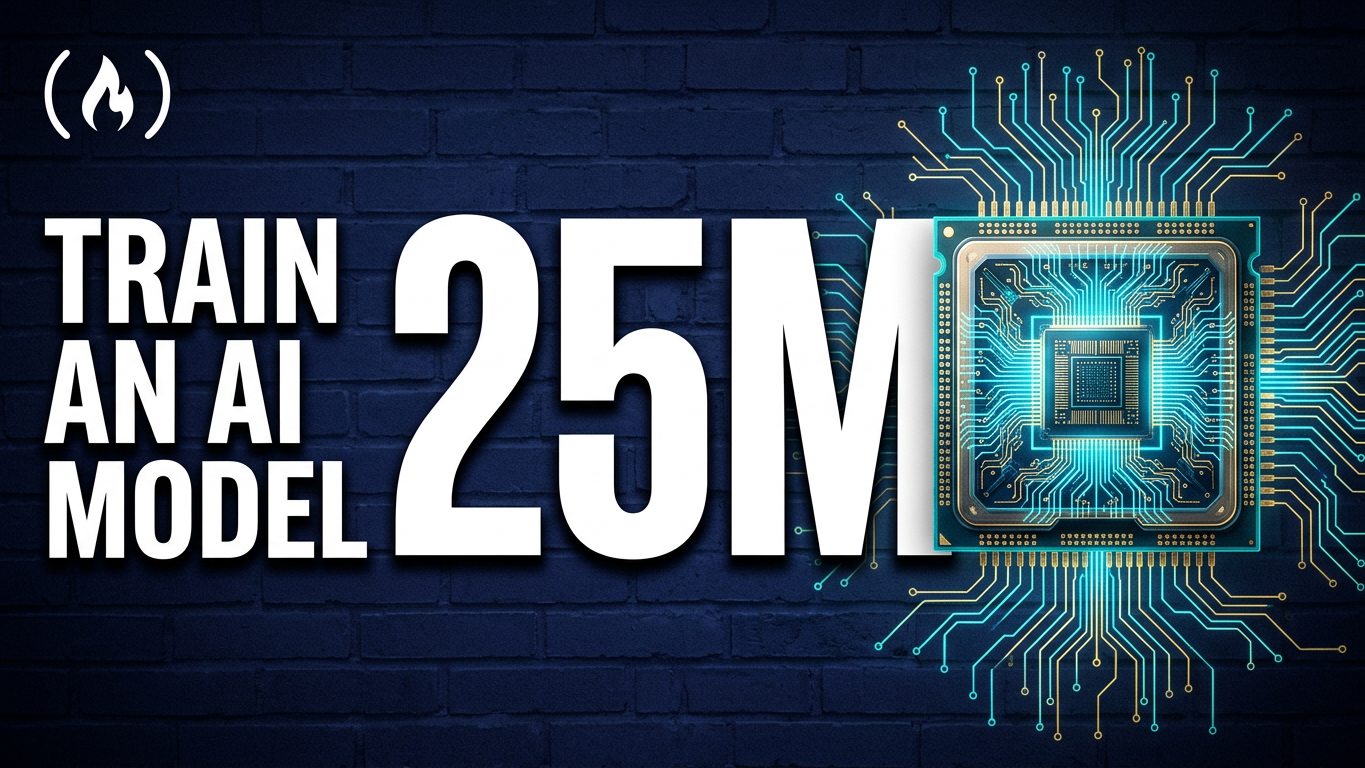
A New Tutorial Builds and Trains a 25-Million-Parameter LLM on a CPU

freeCodeCamp published a tutorial that builds, pre-trains, and fine-tunes a 25-million-parameter language model on a standard CPU. The smaller setup is meant to make training loops and architectural choices observable without renting a large accelerator fleet.

The course covers topics including byte-level vocabulary, attention, mixture-of-experts components, and a lightweight reinforcement-learning loop. A compact model cannot reproduce frontier-scale capability, but it can make the mechanics of data, loss, and evaluation easier to experiment with.

Running locally also shortens iteration time for educational experiments and reduces infrastructure cost. Learners can observe how training behavior changes when they alter data or reward signals, rather than treating model output as a black box.

This is a tutorial, not a claim that a laptop can train a competitive frontier model. Its value is as an accessible systems exercise for understanding the pipeline and its resource trade-offs.

Bevy has published version 0.20 of its open-source game engine. The release is relevant to teams building in Rust because engine upgrades can change APIs and affect the interaction between an application’s ECS, rendering, asset pipeline, and plugins.

The announcement is the starting point for reviewing the release notes and migration guidance; projects should check their plugin compatibility and compile against the new version before updating shared dependencies.

An engine release is also a snapshot of the ecosystem’s evolving abstractions. Application teams can compare the new APIs with their existing architecture and decide whether an upgrade removes enough friction to justify the migration.

Because the release page exposes limited detail in some readers, this summary avoids attributing individual feature changes without the full notes. Treat the official changelog and migration instructions as the source of truth for upgrade planning.

K10s is a Go-based terminal interface for navigating Kubernetes resources, built with Bubble Tea. Its October 8 Show HN launch presents a clickable alternative to issuing every inspection command manually.

A TUI can shorten the path from cluster overview to a specific pod, event, or log stream, particularly during diagnosis. The main engineering question is how clearly it distinguishes read-only inspection from operations that change cluster state.

Because Kubernetes credentials can grant broad access, convenience should not hide the current context, namespace, or target cluster. Operators should review the tool’s permission requirements and avoid testing it with production credentials until its behavior is understood.

The repository is an early project rather than a mature replacement for established tooling. Its value will depend on how well it handles large resource sets, access errors, and the safeguards needed for high-impact actions.

Viberuler is an open-source tool for measuring where an AI coding assistant’s context is going. Its launch focuses on making the mix of files and other material supplied to an agent easier to inspect.

Context is a finite resource, and its composition affects both cost and answer quality. If a system repeatedly includes irrelevant files or loses important instructions among tool output, a visualization can help developers identify the retrieval or prompting behavior that needs attention.

The repository is an early project, so its instrumentation coverage and compatibility need to be checked before relying on its measurements. Teams should also establish whether captured context contains credentials, customer data, or proprietary code before storing or sharing traces.

The broader value is observability for agent systems. Measuring what entered a model is a prerequisite to explaining why an edit was made, debugging wasted work, and comparing retrieval strategies across tasks.